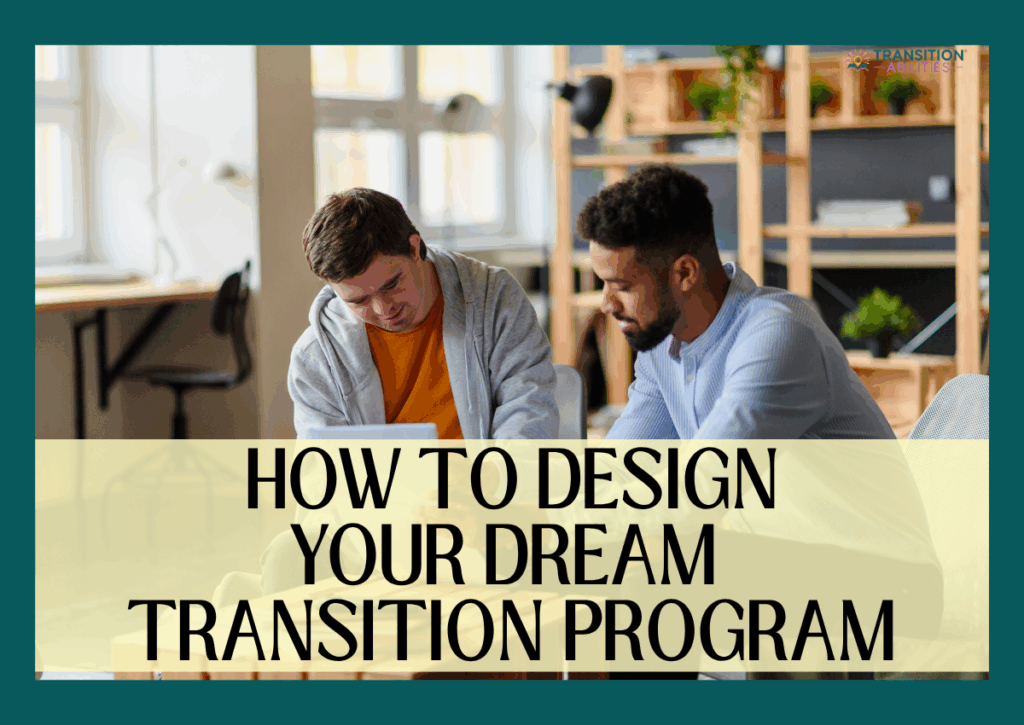
How to Design Your Dream Transition Program
Have you ever thought about what your dream transition program would look like? You’re not alone.
Every special education teacher has dreamed of designing the perfect transition program, one that prepares students for life after high school. But actually building it becomes the tricky part.
What is a dream transition classroom anyway? What is the best? Well, there is no single “best” or “dream” transition program because it always depends on your students’ needs. But there is a strong and effective transition program, and it isn’t about big budgets or fully equipped classroom areas.
It’s about giving students meaningful, hands-on experiences that build independence, confidence, and everyday life skills.
If you’re starting your transition curriculum from scratch or improving what you already have, here’s what a strong transition program can look like, and how to build one that fits your students.
What Makes a Strong Transition Program
A strong transition program doesn’t need fancy equipment or a perfect classroom layout. What matters most is that it prepares the students for life after high school, whether in the community, at work, or in their personal lives.
There’s no one-size-fits-all formula, but most transition curriculums include lessons across these six key skill areas:
- Physical Health
- Community Skills
- Household Skills
- Managing Money
- Social-Emotional Health
- Vocational Skills
Each one connects to functional living skills and gives your students experiences they’ll carry into adulthood.
Let’s take a closer look at what each one can look like in your classroom!
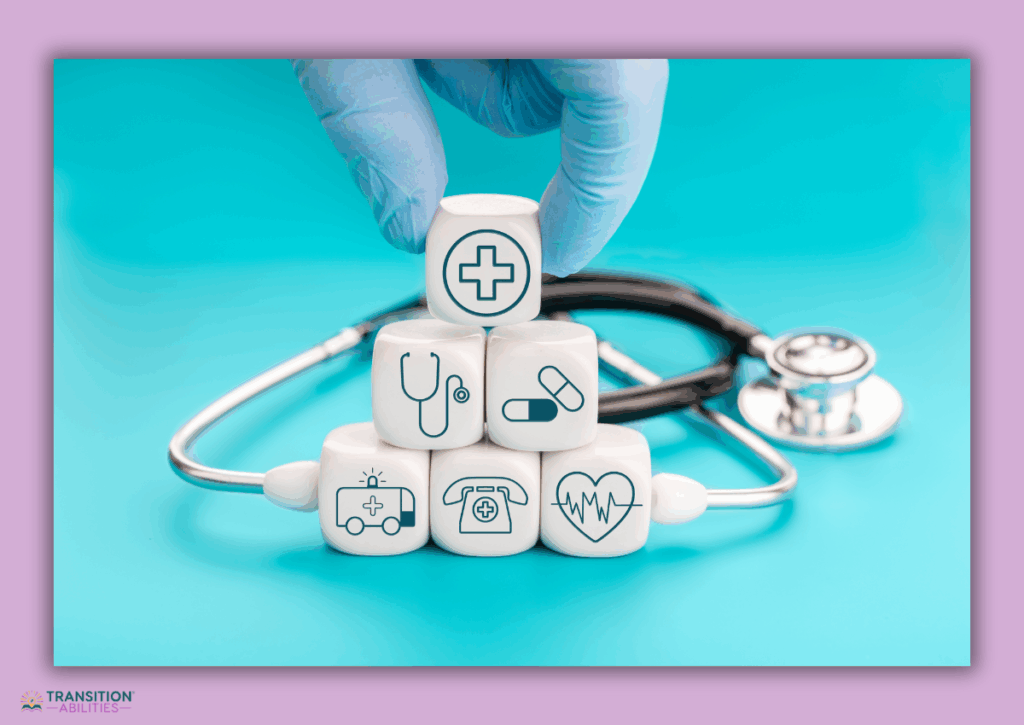
Physical Health
Physical health lessons help students understand their bodies, build daily routines, and stay active. Without this foundation, things like work attendance, self-care, and emotional regulation can become difficult.
Program Ideas:
- Set up a hygiene station or routine area with visuals for brushing teeth, washing hands, and personal grooming.
- Include lessons on nutrition, sleep, hydration, and daily exercise.
- Use a “health log” or tracker for students to record their wellness routines.
- Invite a school nurse or local health worker for demonstrations.
- Teach about first aid, doctor’s appointments, and recognizing when to ask for help.
- Follow a simple exercise video like morning stretching.
These activities give students tools to take care of themselves, which is something they’ll rely on far beyond school.
Community Skills
Community experiences are at the heart of transition programs. Transition students should have regular chances to navigate real-world settings, from grocery stores and restaurants to post offices and job sites.
These trips teach far more than just location awareness. They build confidence, safety awareness, and appropriate social behavior in public.
If off-campus outings aren’t possible every week, bring the community to your classroom! Try mock community activities like setting up a pretend cafe, organizing a class “errands day,” or practicing public transportation routes virtually.
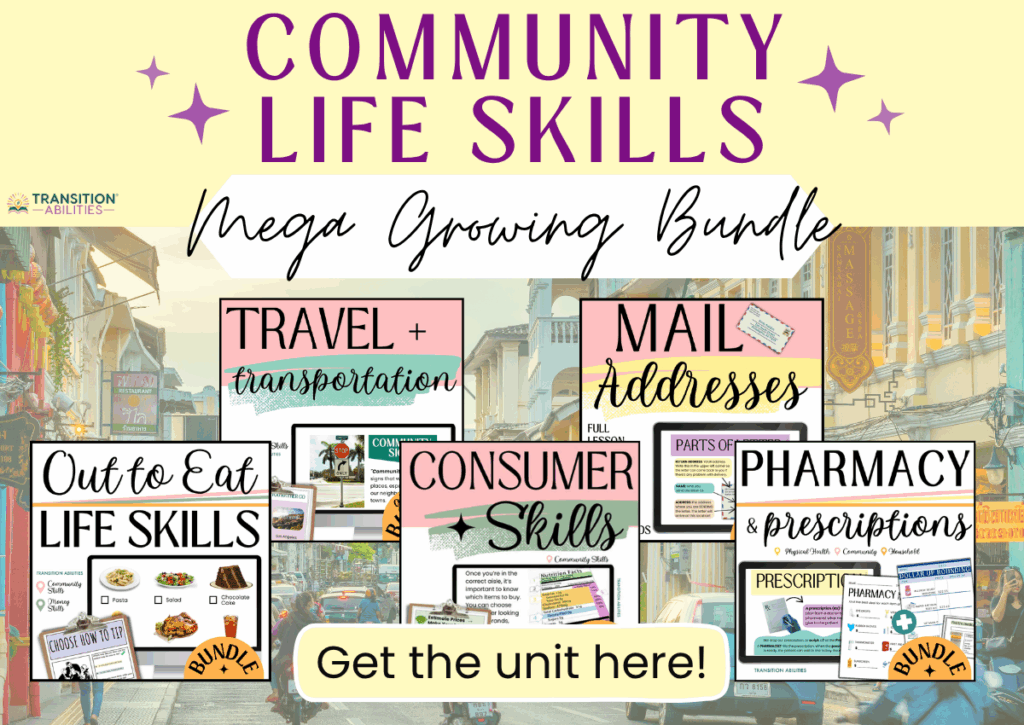
Teach community skills to your special education middle or high school students with this Community Life Skills Mega Growing Bundle! It includes all my community resources that I have made so far (and that I will continue to create). That’s two years’ worth of lessons, activities & units with differentiated options!
Household Skills
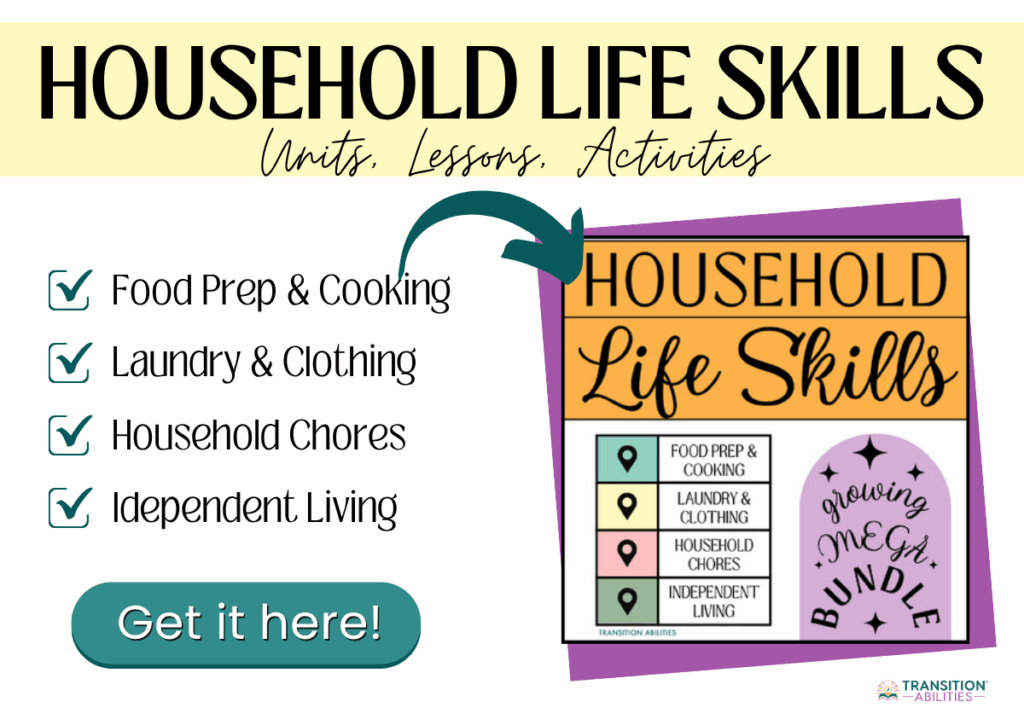
Knowing how to manage a home is one of the most empowering skills a student can gain. Laundry chores, dishes, cleaning routines, and simple repairs all contribute to independent living. These tasks also teach time management, organization, and pride in taking care of one’s own space.
Program Ideas:
- Set up mini household workstations like a laundry corner, kitchen station, or cleaning supply area.
- Create visual task cards for chores like sweeping, folding, wiping, and sorting.
- Teach kitchen safety, food storage, and meal planning.
- Host weekly meal prep or cooking lessons with simple recipes.
You don’t need a full kitchen! Even a small table with supplies and clear visuals can make these lessons hands-on.
Managing Money
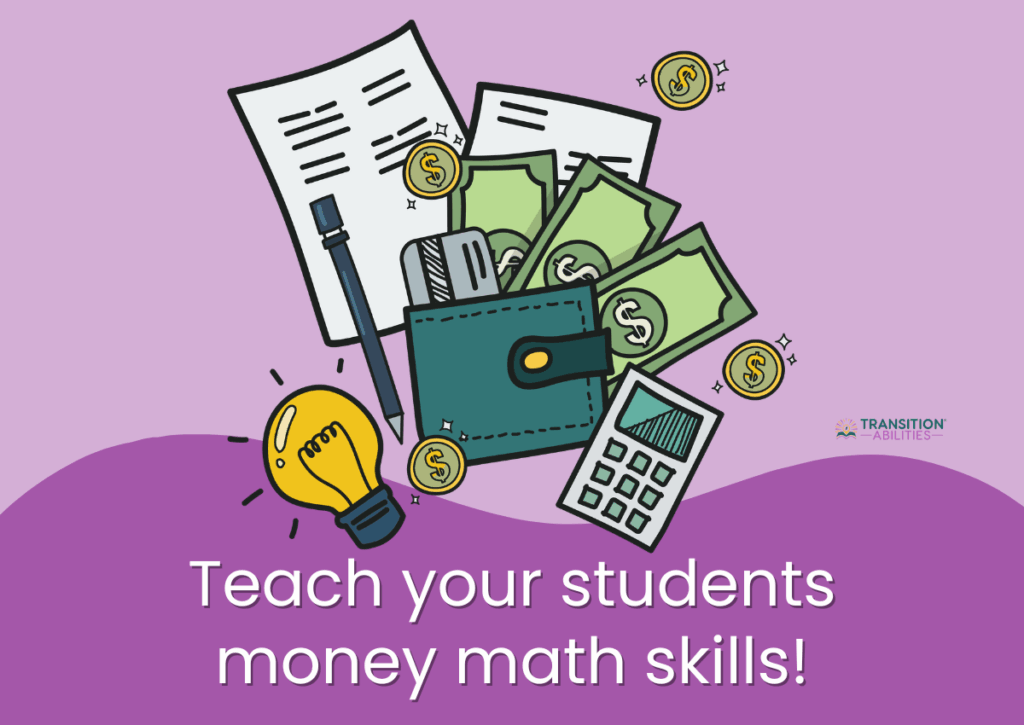
Money management is one of the most essential parts of adult life. However, it’s also one of the hardest to teach.
For students with disabilities, starting small is the best step. Have them start with the value of coins, reading price tags, or budgeting for a snack.
You can also include practical lessons like using real or simulated cash registers, comparing prices during grocery trips, or running a class store.
Some programs run student businesses, like coffee carts or smoothie stands, which teach earning, budgeting, and teamwork all at once.
Even if you don’t have a setup like that, small, consistent lessons on needs vs. wants, price comparison, or budgeting can go a long way. The goal is for students to feel confident handling money in real-world situations, no matter the amount.
Social-Emotional Health
Transition programs often focus on job and life skills, but social-emotional health is just as important. It’s often what determines whether your students thrive after graduation. They need to learn how to express their feelings, cope with stress, and advocate for themselves.
Integrate social-emotional learning into your daily routine! The easiest way for me is to have them watch animated video lessons that talk about topics like neurodiversity, autism, and self-advocacy.
You can also include daily check-ins, mindfulness activities, or role-playing conversations.
When students can regulate their emotions and advocate for themselves, everything else becomes more attainable.
Vocational Skills
Job readiness is one of the most visible goals of any transition program. Students should explore different types of jobs, learn about workplace expectations, and practice soft skills like communication, teamwork, and time management. They benefit from structured, meaningful vocational experiences, whether it’s on campus, in the community, or through classroom-based jobs.
Program Ideas:
- Offer on-campus jobs like mail delivery, recycling, or cafeteria help.
- Partner with local businesses for job shadowing or work experiences.
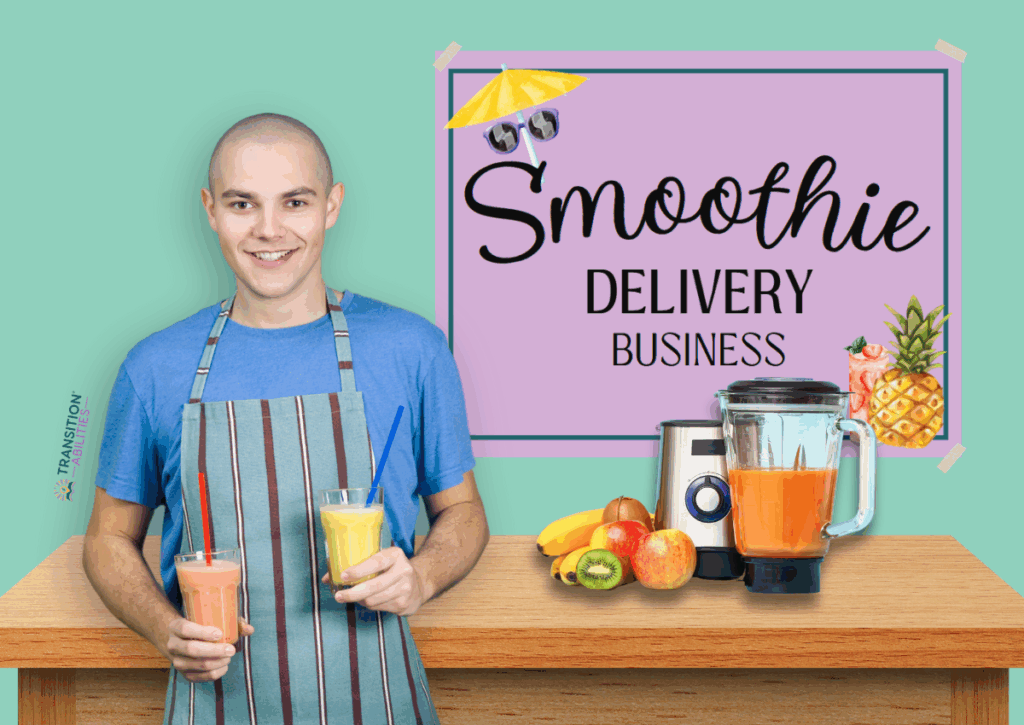
- Create a small student-run business (coffee cart, smoothie delivery, Thanksgiving grocery delivery).
- Use visual task boxes and data sheets to teach job routines.
- Include lessons on workplace expectations, interviews, and resumes.
If your program includes job sites, that’s amazing! But even classroom-based simulations or school jobs can teach real employability skills. Give your students chances to try tasks, reflect on what they enjoy, and connect it all to real-life goals.
Building Your Transition Program with a Roadmap
When you start building or refining your program, it helps to have a roadmap. A clear scope and sequence can guide what to teach each quarter, show where different skill areas overlap, and keep your lessons consistent throughout the year.
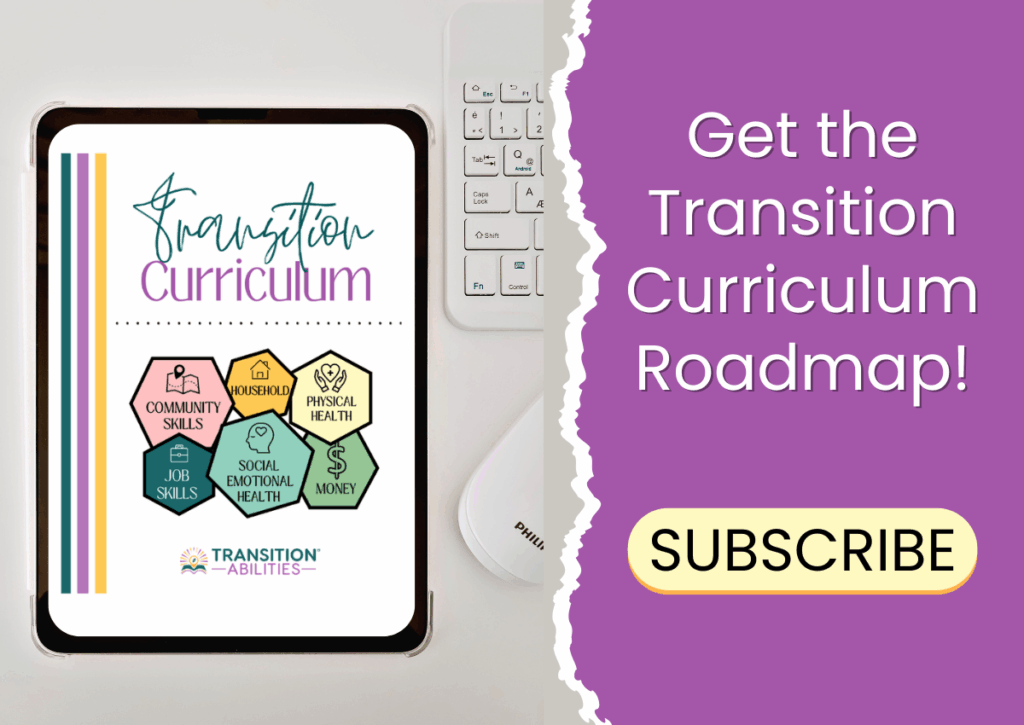
If you don’t have one yet, subscribe and get this FREE Transition Curriculum Roadmap! It’s designed specifically for middle school, high school, and transition SPED classrooms, and it aligns perfectly with these six pillars.
But don’t be overwhelmed! You don’t need to implement all six pillars at once. Start small, focus on your students’ immediate needs, and grow from there.
Here’s how to make progress without feeling overwhelmed:
- Pick one pillar to focus on for a semester.
- Use what’s already available in your classroom or community.
- Adapt lessons for different ability levels.
- Incorporate visuals and routines for consistency.
- Reflect and adjust based on student engagement.
Over time, your program will become more structured, more meaningful, and uniquely tailored to your students. Remember that designing a strong transition program isn’t about perfection. It’s about purpose!
If you’d like ready-to-use materials to help you teach these skills, explore my Transition Abilities resources and check out my post on 6 Essential Special Education Transition Curriculum Skills to Teach for even more guidance and examples.
Your Dream Transition Program
In the end, a strong program balances all six areas: health, community, household, money, social-emotional, and vocational. It’s a mix of structure and flexibility.
You don’t need to have everything figured out or perfectly organized. Start where you are, focus on real-world practice, and keep your students’ independence at the heart of every lesson.